

The Problem:
The fragility of the system: change in one node of workflow would cause a cascade of disruption across the network. The ecosystem has been running for decades and while it needs to be optimized and upgraded, it must stay running 24/7. Changes must be done without disruption across all branches while navigating tight regulations and quality standard.
The Conditions:
- 23 Operational branches throughout Indonesia.
- High-profile clients: mining giants and international airlines.
- 24/7 operations, 3 timezones.
- Some areas doesn’t have robust internet connectivity.
- HACCP with zero-error tolerance.
- Second largest service operator in Indonesia with 30+ years of reputation.
The strategy: Modularization
Create information matrix between the flow and the area of work & standardize information across all branches by implementing custom ERP. Implement information syncing mechanism to cover low to patchy internet connectivity in deep jungle of Indonesia. Information lag is then synced with meshed network of the HQ, ensuring no information loss.
The outcome
- Waste reduction of 19%, via predictive meal planning
- Cost saving by ~28% in average throughout all branches by bulk procurement
- Cut decision making process to 2 days from 7 days via custom information sync method on rural areas
The insight
Due to the logistic challenges, inventory turnover was centralized in major cities of Indonesia (Jakarta, Balikpapan, Surabaya) and that cause bottlenecks in the overall production planning. By implementing predictive meal planning, meal plan is broken down into layered steps such as base meal, sub-meal, and sub-ingredients. Each branch contribute to overall workflow by combining local production capabilities and logistic time. This creates mesh-network of production, ensuring each branch operation is fully optimized.
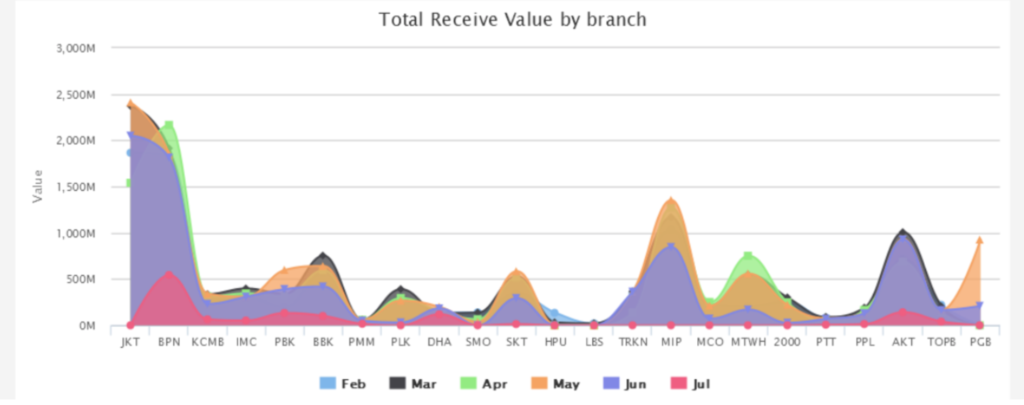
Apart from it, by combining previous meal production data and procurement data as well as seasonal data, procurement can better plan the blanket materials needed for production months before production happens.
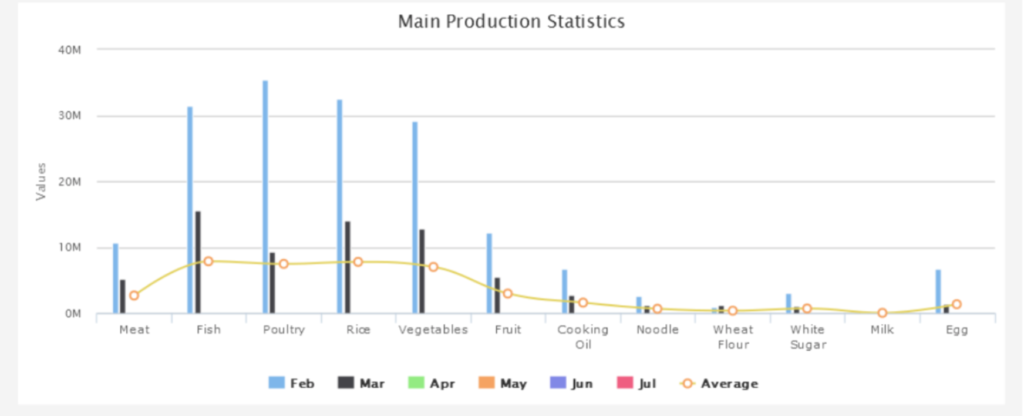
Each ingredients is tied to another category as a safety net. In the case there’s a short of ingredients due to external market, both the mesh-production network and the predictive menu planning can be adjusted, ensuring proper substitution menu that fulfill the required nutritions for their clients.